
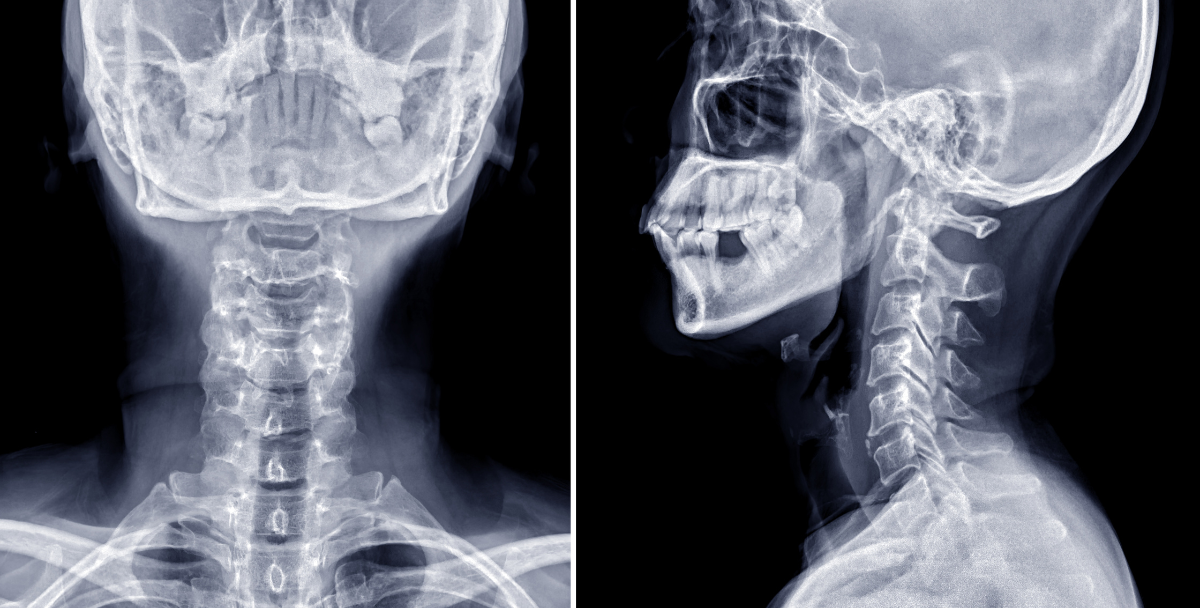
Your Scan Shows Changes. Does That Mean You’ll Always Be in Pain?
Have you ever had an MRI or X-ray that showed a disc bulge, arthritis or degenerative changes, leaving you worried about what it means for your future?
Perhaps you’ve started avoiding certain movements because you’ve been told your spine is damaged, or you’re concerned that things will only get worse.
You’re not alone. But there’s something important to understand: what we see on a scan doesn’t always explain what you feel, and it doesn’t determine your future.
Imaging can be incredibly useful in the right circumstances, but it is only one piece of the puzzle when it comes to understanding pain.
A scan is a snapshot in time
An MRI, X-ray or CT scan shows us what certain structures in your body look like at a particular moment. It doesn’t tell us the whole story about how your body functions, why you’re experiencing symptoms or how things might change over time.
For example, a scan might identify a disc bulge that has been present for years, even if your back pain only started recently.
Just because something shows up on a scan doesn’t automatically mean it’s the cause of your pain.
Findings need to be considered alongside your symptoms, medical history and physical assessment to determine whether they are relevant to your situation.
Many scan findings are common in people without pain
Research has shown that many people who have no back pain have findings such as disc bulges, disc degeneration and other age-related changes on imaging. These findings become increasingly common as we get older.
You might have changes in your spine without ever experiencing symptoms from them. Equally, you might have pain without significant findings on a scan.
This doesn’t mean imaging findings are unimportant. Some can contribute to symptoms or require further investigation. It simply means we shouldn’t assume that every abnormality is a problem that needs fixing.
Your scan doesn't predict your future
Words such as degeneration, wear and tear and disc damage can sound frightening. It’s understandable to worry that your body is deteriorating or that you’ll always be in pain.
However, a structural change on a scan doesn’t mean you’re destined to experience pain forever.
Pain can improve even when the findings on a scan remain unchanged. That’s because pain is influenced by more than the appearance of your tissues. Your nervous system, sleep, stress, general health, movement and previous experiences can all play a role.
A scan is not a crystal ball. It cannot, on its own, tell us how much pain you’ll experience in the future or what you’ll be capable of doing.
When scan results make us afraid to move
One of the biggest concerns is how imaging results can change the way we think about our bodies.
If you’re told your spine is worn out or your discs are damaged, you might understandably become cautious. You may avoid bending, lifting, twisting or exercising because you’re worried about causing further damage.
But avoiding movement out of fear isn’t necessarily protecting your body.
For many musculoskeletal conditions, appropriate movement and gradually returning to everyday activities are important parts of recovery. Movement helps maintain strength, mobility and confidence in what your body can do.
This doesn’t mean ignoring symptoms or pushing through everything. Some conditions require specific precautions. The goal is to find an appropriate level of activity and build up gradually, rather than assuming that a scan finding means your body is fragile.
Your body is adaptable, and there is often much more you can do than you might think.
So, what causes pain?
Pain is complex. Although irritated or injured tissues can contribute to pain, the relationship between tissue damage and pain isn’t always straightforward.
The nervous system plays an important role in how pain is experienced, while factors such as stress, poor sleep, previous experiences and the demands of everyday life can also influence symptoms.
This doesn’t mean pain is imaginary or “all in your head”. It means pain is a real, multifaceted experience that cannot always be explained by a picture of your anatomy.
This is why two people with very similar scan findings can have completely different experiences- one may have no pain at all, while the other experiences significant symptoms.
Does this mean scans aren't useful?
Not at all. Imaging can be essential when investigating certain injuries, fractures or potentially serious conditions. It can also help guide treatment decisions when the results are likely to change how a problem is managed.
However, scans aren’t always necessary for common back or neck pain. The decision to investigate further should be based on your individual symptoms, medical history and clinical assessment.
If you’ve already had a scan, the important thing is understanding what the findings mean for you, rather than assuming every finding explains your pain or places permanent restrictions on your activities.
How does this influence our approach to osteopathy?
At Whole Body Osteopathy, we look beyond the scan results and the area where you’re experiencing symptoms. We consider you as a whole person, including your movement, medical history, daily activities and individual goals.
If you’ve been worried about what your scan means, we can help you understand the findings in context and discuss appropriate ways to move forward. Depending on your needs, this may include hands-on treatment, movement advice and strategies to help you gradually return to the activities that matter to you.
Our aim is to help you feel informed rather than frightened, and supported rather than restricted.
The takeaway
You are more than your scan results.
Imaging can provide valuable information, but it doesn’t tell the whole story about your pain or determine what your future will look like. Structural changes are common, even in people without symptoms, and appropriate movement is often an important part of recovery.
If you’re worried about what your scan means or have started avoiding activities because of something you’ve been told, Whole Body Osteopathy is here to help you better understand your body and work towards your goals.
Learn more or book an appointment.
This article is for general educational purposes and is not a substitute for individual medical assessment or advice. Imaging findings should always be interpreted in the context of your symptoms and clinical presentation.
Want to learn more?
If you’d like to do some more reading on this topic, below are some links to relevant research.
We also highly recommend the book ‘Explain Pain’ and other resources from the NOI Group.
Brinjikji W, et al. (2015). Systematic literature review of imaging features of spinal degeneration in asymptomatic populations. American Journal of Neuroradiology, 36(4), 811–816.
National Institute for Health and Care Excellence (NICE). Low back pain and sciatica in over 16s: assessment and management (NG59).