
The Importance of Compression in Lymphoedema Management
When it comes to lymphoedema management, manual lymphatic drainage (MLD) often gets a lot of attention. However, while MLD can play a valuable role in treatment, it is only one part of a much bigger picture.
Compression is a fundamental component of lymphoedema management, helping control swelling, maintain treatment results and support long-term self-management.
So, why is compression so important, and what should you know if you’re living with lymphoedema?
What is compression, and how does it work?
Lymphoedema occurs when the lymphatic system cannot adequately transport lymphatic fluid away from the tissues, resulting in fluid accumulation and swelling.
Compression works by applying controlled pressure to the affected area. When appropriately fitted, it helps support the movement of fluid through the lymphatic system and reduces the accumulation of fluid in the tissues.
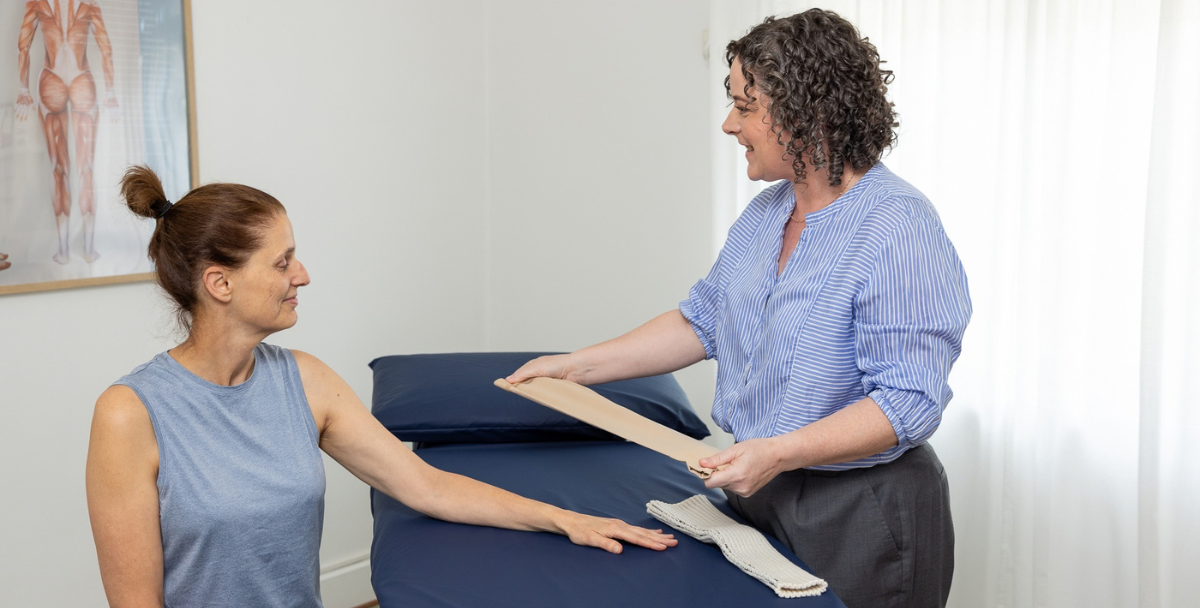
Compression can take several forms, including compression bandaging and compression garments. The most appropriate option depends on your individual circumstances, the severity of your swelling, and your treatment goals.
Why is compression so important?
1. It helps manage swelling
One of the primary goals of lymphoedema management is to reduce and control swelling.
Compression supports fluid movement and helps limit further fluid accumulation. For some people, compression bandaging or wraps may be used initially to reduce swelling, followed by a compression garment to help maintain those improvements.
Without appropriate ongoing management, swelling may gradually increase, potentially contributing to further tissue changes.
2. It helps maintain your treatment results
Manual lymphatic drainage (MLD) is a specialised technique that aims to encourage lymphatic fluid movement. It may be beneficial for some people as part of a broader lymphoedema management plan.
However, reducing swelling during a treatment session is only part of the process. What happens between appointments matters, too.
Compression helps maintain the improvements achieved through treatment and supports ongoing swelling management between appointments.
Think of it this way: treatment in the clinic is one piece of the puzzle, but your daily management strategies are just as important.
3. It may help reduce the risk of complications
Longstanding, poorly controlled lymphoedema can contribute to changes in the affected tissues, including fibrosis (tissue thickening and hardening) and skin changes. Lymphoedema can also increase the risk of skin infections, such as cellulitis.
Appropriate compression, alongside skin care and other management strategies, can help control swelling and support tissue health.
While compression cannot guarantee that complications will be prevented, it is an important part of a comprehensive management approach.
4. It supports long-term self-management
This is one of the most important aspects of lymphoedema care.
The goal shouldn’t simply be to reduce your swelling during an appointment. It should be to help you understand your condition and develop the knowledge, skills and confidence to manage it as independently as possible.
That includes understanding your compression options, knowing how and when to use them, looking after your skin and recognising when you need further assessment.
Good lymphoedema management is about giving you the tools to manage your condition in everyday life, not just when you’re in the treatment room.
Is manual lymphatic drainage enough?
MLD can play an important role in lymphoedema treatment, but it is generally not intended to be the sole management strategy.
For many people, effective lymphoedema management involves a combination of approaches, often referred to as Complex Lymphoedema Therapy (CLT) or Complete Decongestive Therapy (CDT).
Depending on your individual needs, this may include:
- Compression therapy: Using appropriately selected bandages or garments to help manage swelling.
- Manual lymphatic drainage: A specialised hands-on technique that may assist lymphatic fluid movement.
- Skin care: Maintaining healthy skin and reducing the risk of infection.
- Movement and exercise: Supporting muscle activity, circulation and lymphatic function.
- Education and self-management: Understanding your condition and learning how to manage it between appointments.
Not everyone needs every component to the same extent. Your treatment plan should reflect your individual presentation, health, goals and circumstances.
What if compression hasn't been recommended for you?
Compression isn’t suitable for everyone in the same way, and it needs to be selected carefully.
Factors such as your medical history, circulation, skin condition, limb shape, amount of swelling, and ability to apply and remove garments can influence which options are appropriate.
There may be valid reasons why compression needs to be modified, introduced gradually or assessed further before use.
However, there should be a clear rationale for your management plan, and compression should not simply be overlooked.
If compression hasn’t been discussed, consider asking your practitioner:
- Would compression be appropriate for my condition?
- What type of compression would best suit my needs?
- Would I benefit from compression bandaging, a garment or both?
- How do I ensure my garment fits correctly?
- How can I manage my swelling between appointments?
You deserve to understand your treatment options and be involved in decisions about your care.
The importance of the right compression garment
Compression isn’t a case of simply buying the tightest garment available.
The garment needs to be appropriate for your individual needs, with consideration given to the level of compression, fit, material, limb shape and any other relevant health factors.
A poorly fitting garment may be uncomfortable, difficult to use, or ineffective. In some circumstances, inappropriate compression may cause harm.
A trained practitioner can assess your needs, help determine the most appropriate option, and arrange garment measurement and prescription where indicated and within their scope of practice.
It’s also important to remember that compression needs can change over time. Changes in swelling, limb shape, skin condition or general health may mean your management plan needs to be reviewed.
The best compression garment is one that is clinically appropriate, fits well and is practical for you to use consistently.
My approach to lymphoedema management
As an osteopath with further training in lymphoedema management, I take a whole-person approach to care.
That means looking beyond the swelling itself and considering your overall health, daily activities, skin health, movement, comfort and personal goals.
I want you to understand what’s happening in your body and why we’re recommending particular management strategies.
Where appropriate, treatment may include manual lymphatic drainage, compression bandaging, compression garment assessment and management, skin care advice, movement and exercise recommendations, and education to support you in managing your condition.
My aim is not to make you dependent on regular appointments. It’s to help you develop a practical, individualised management plan that supports your long-term wellbeing.
Living with lymphoedema and looking for support?
At Whole Body Osteopathy in Hilton, South Australia, I provide individualised lymphoedema management with an emphasis on education, practical self-management strategies and care tailored to your needs and goals.
You can learn more about my approach in my blog post, Lymphoedema Treatment in Adelaide Now Available at Whole Body Osteopathy, or visit the About Lymphoedema page on my website to explore the services available.
Not sure if lymphoedema management at Whole Body Osteopathy is right for you? You can book a complimentary 15-minute discovery call to discuss your needs and ask any questions before committing to an appointment.
If you’re ready to get started, you can book your initial lymphoedema consultation directly through the online booking page.
My goal is to help you better understand your condition, feel confident managing it, and develop a practical plan to support your long-term wellbeing.